
Archive index
An evolving record of Gustav Reyes’s practice, from the first wooden-ring experiments and Simply Wood Rings through contemporary art jewelry, sculptural objects, material research, periods of pause, and the return to the studio.
The archive is organized around periods of development rather than as a complete chronology. Historical photographs, writing, correspondence, press, and studio records are included when they help clarify how the work changed and which questions continued through it.
2005–2008
The earliest wooden rings began with a structural problem: how to make wood strong enough to live on the body. Etsy records, buyer reviews, correspondence, photographs, and early website files document the rapid movement from laminated wedding bands toward objects that were increasingly sculptural and symbolic. By 2008, works such as The Key were already operating as both ring and small sculpture.
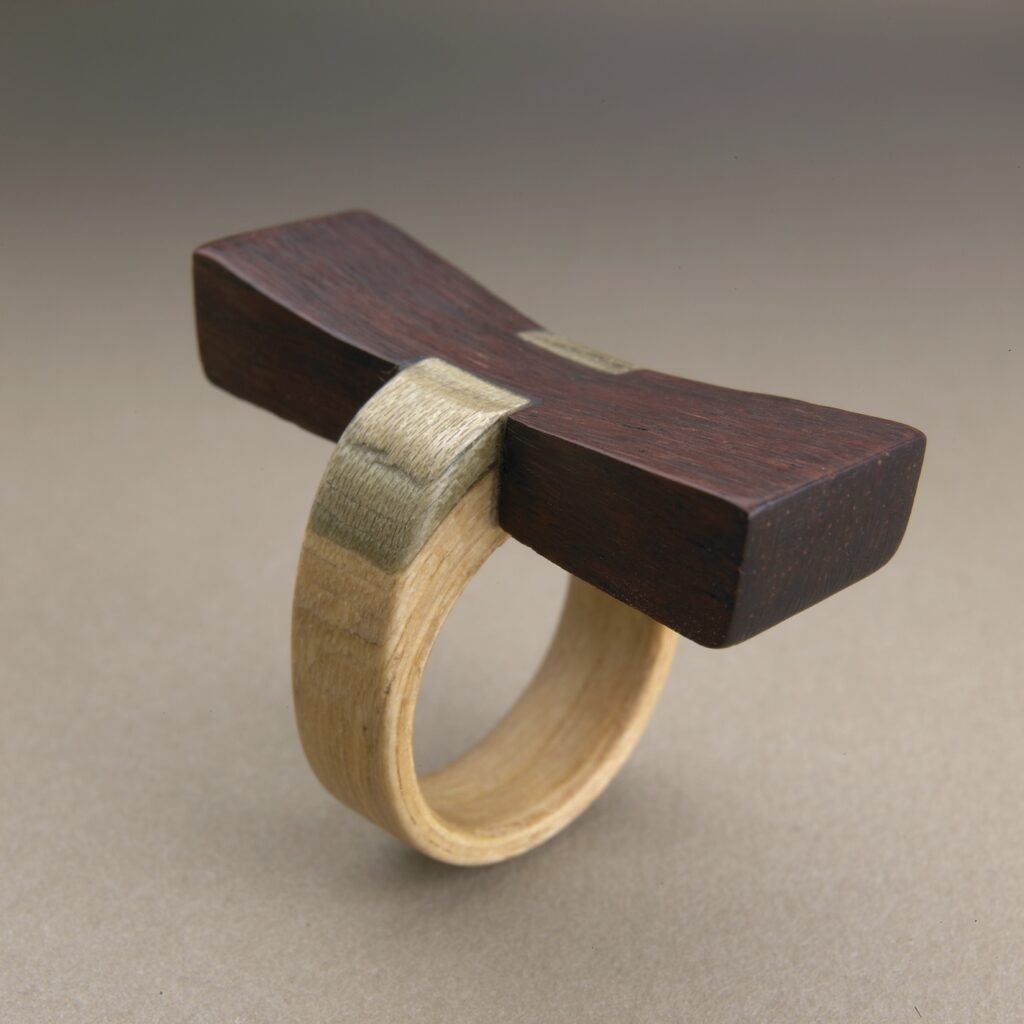
c. 2006–2018
The wooden-ring practice grew into a working Chicago studio where custom commissions, unusual materials, production systems, and collaboration became part of the development of the work.
2008–2018
Over the following decade, bending expanded from a structural solution into a broader visual and conceptual language. Neckpieces, brooches, Organic Coil and Arc Series works, Ad Idem, the 360 Series, Walking sculptures, and selected lighting and furniture experiments carried related questions across the body and across scale. Salvaged material, repetition, handwork, digital processes, and 3D printing increasingly occupied the same studio vocabulary.
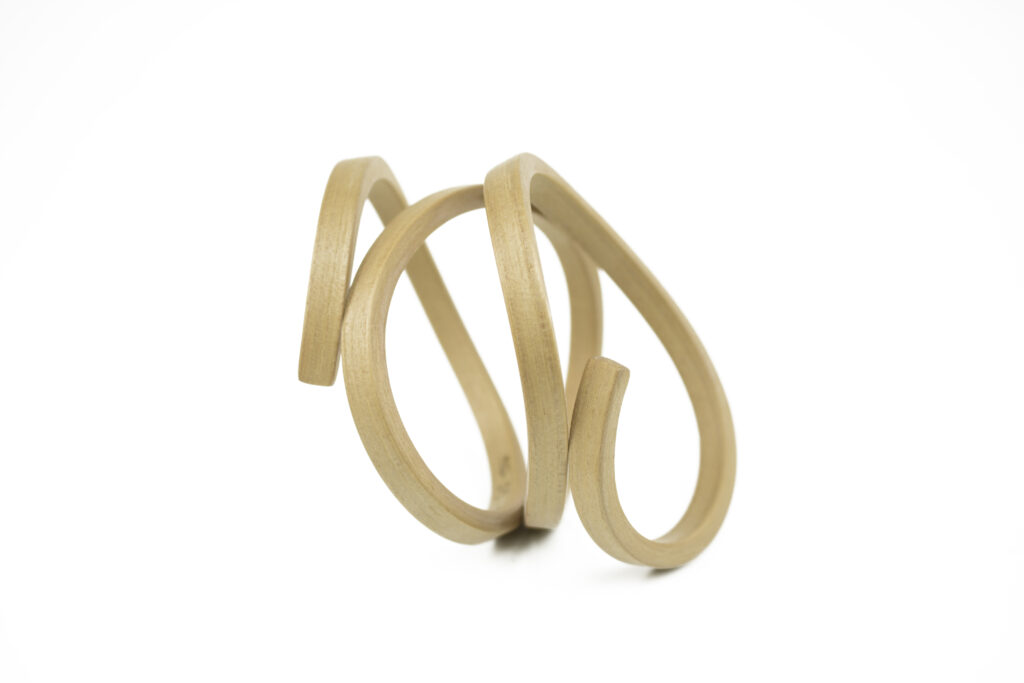
roughly 2018–2023
As Simply Wood Rings closed and regular studio production slowed, the practice entered a quieter period. A small number of commissions continued, often as highly specific one-off objects shaped through conversation with the person who commissioned them. In these works, story, material, object, and presentation could be treated as a single experience.
This period remains under active archival research. Commission photographs, drawings, correspondence, and fabrication files will be added as they are recovered and verified.
Archival research in progress
2024–present
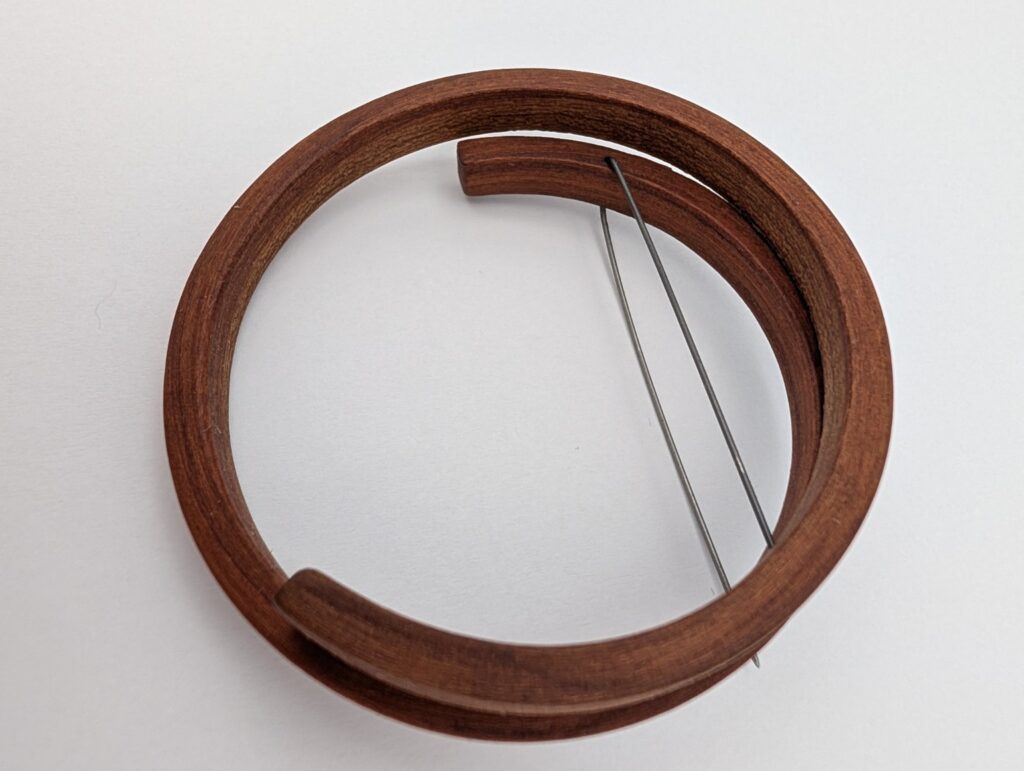
The return to sustained studio work did not begin as a rejection of the earlier practice. It reopened questions that had been present for years: the tension between straight and curved form, the memory held by salvaged material, the relationship between object and body, and the usefulness of both hand tools and contemporary fabrication. The current work continues those questions through a quieter, more distilled language.
Across the archive
Material memory. Wood carries its prior life—place, age, use, structure, and association—into the new object.
Impermanence. Wood makes time visible and offers a way to think about growth, change, mortality, presence, and value.
Body and adornment. The wearer is not separate from the work. The body completes it and gives the object another life.
Hand and technology. Bending, laminating, hand tools, CNC processes, laser cutting, and 3D printing belong to the same continuum when they deepen the relationship between thought, material, and making.
Related records
Studio Journal →
Historical writing from 2009–2012, preserved with its original dates and wording.
Press & Writing →
Selected interviews, articles, institutional writing, and published material.
CV →
Exhibitions, collections, lectures, and professional record.
This archive continues to develop. Historical material is added only when its date and provenance can be documented responsibly.